Productivity | Room Acoustics
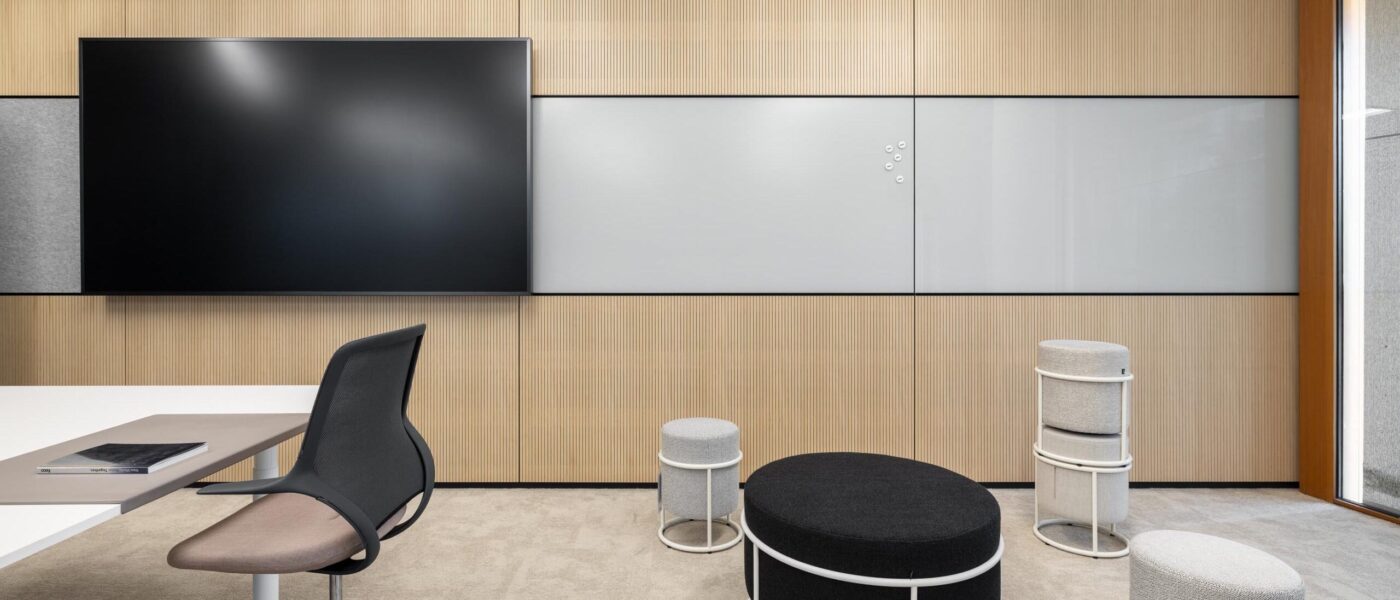
Well-being through optimal sound absorption.

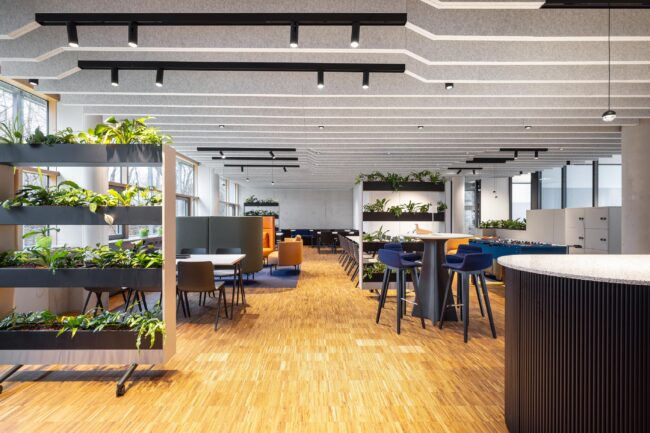
Well-designed office furnishings, incorporating acoustically effective furniture and design elements, improve concentration, speech intelligibility and the quality of the working environment.
The acoustic quality of working environments is a key factor in employees’ well-being and productivity. Particularly in open-plan offices and multi-space layouts, conversations, telephone calls and general ambient noise can impair concentration. Long reverberation times and a lack of sound-absorbing surfaces cause sound to be reflected more intensely within the room, leading to acoustic stress.
Room acoustics focuses on the propagation of sound within a room and differs from building acoustics, which describes the transmission of sound between different rooms. Targeted room acoustic planning therefore relies on the right combination of sound-absorbing surfaces, acoustic furniture, space-defining furnishings and a balanced layout.
The German Occupational Health and Safety Regulation ASR A3.7 ‘Noise’ and the DIN 18041 standard provide important guidance for the design of acoustically suitable working environments.
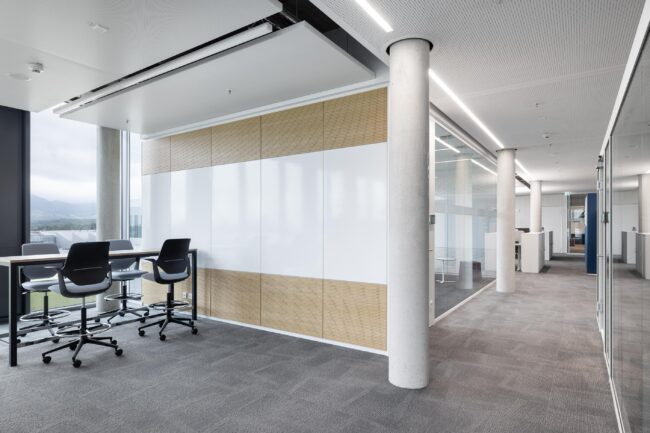
Physical principles of room acoustics
The key parameter for assessing the effectiveness of room acoustic measures is the sound absorption coefficient αw. This describes the proportion of incident sound energy that is absorbed by a surface and not reflected back into the room. The higher the value, the more effectively the material reduces unwanted reflections.
Another important parameter is the reverberation time T0. This describes the time it takes for a sound event to fade away in the room. The overarching aim of all absorption measures is the targeted reduction of the sound pressure level (measured in dB) in order to noticeably reduce acoustic stress in the room. Excessively long reverberation times impair speech intelligibility and increase acoustic disturbance, particularly in open-plan workspaces.
Acoustically effective office furnishings help to balance out existing room areas in a targeted manner. These include, for example, sound-absorbing screens, fabric-upholstered furniture surfaces, acoustically optimised room dividers or freestanding elements that structure workspaces whilst simultaneously reducing sound propagation.
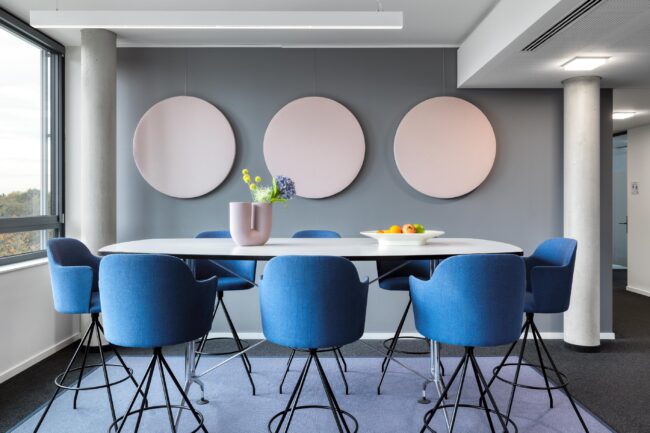
Office furniture as a design element for improved acoustics
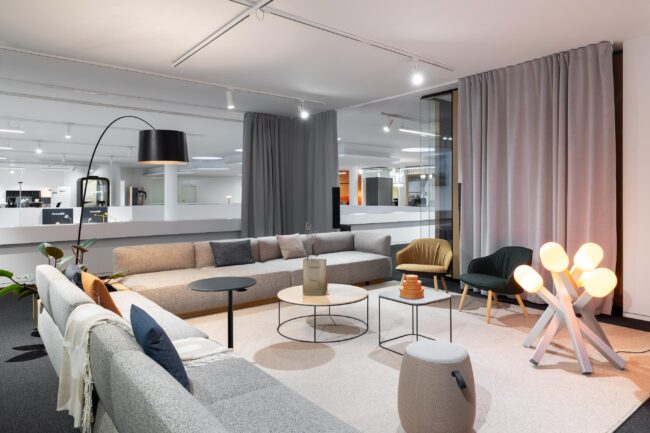
Nowadays, modern office furniture fulfils far more than just a functional role. Furniture and space-defining elements support the zoning of workspaces and create different acoustic qualities for focused work, communication and collaboration.
Acoustic furniture, for example, can visually and acoustically separate workstations without compromising the open-plan nature of modern office concepts. Textile surfaces, upholstered elements and sound-absorbing materials reduce
reflections and contribute to a pleasant perception of the space.
Particularly in agile working environments, the combination of flexible furniture and acoustically effective design elements enables rapid adaptation to changing requirements. This creates spaces that support both team collaboration and focused individual work.
Conclusion: Room acoustics as an integral part of modern office design
Nowadays, high-quality office design takes into account not only ergonomics and aesthetics, but also the acoustic properties of the space. Sound-absorbing furniture, flexible room dividers and strategically placed acoustic elements improve speech intelligibility, reduce distracting noise and enhance the quality of the working environment.
This gives architects and specialist planners the opportunity to design working environments that meet the diverse requirements of modern knowledge-based work and contribute to greater well-being and productivity in the long term
Find out more: Media & Downloads
Make use of further information from our specialist sources and empirical surveys to optimise your planning processes in detail:
Federal Institute for Occupational Safety and Health: Technical Rules for the Assessment and Design of Low-Noise Workplaces
ASR A3.7 Noise
Fraunhofer IAO: Requirements for sustainable office design
Office 21 – Shaping the Future of Work
German Social Accident Insurance (DGUV): Acoustic design of offices, sound absorption and improving the working environment
Acoustics in the office
FAQ – Room acoustics and office furnishings
-
Sound-absorbing furniture, screens and textile surfaces reduce sound reflections and shorten the reverberation time. This creates quieter workspaces with better speech intelligibility and greater comfort.
-
α₍w₎ describes how much sound energy a surface or piece of furniture absorbs. A high absorption coefficient reduces unwanted reflections and improves the acoustic quality of a room.
-
ASR A3.7 sets out recommendations and requirements for the assessment and design of workplaces with regard to noise and acoustic stress. It supports the proactive planning of comfortable working environments.
We are at your service.

We are at your service.
Visit us in the feco-forum on more than 3.500 square meters.
Arrange a consultation