Sustainability | Office furniture
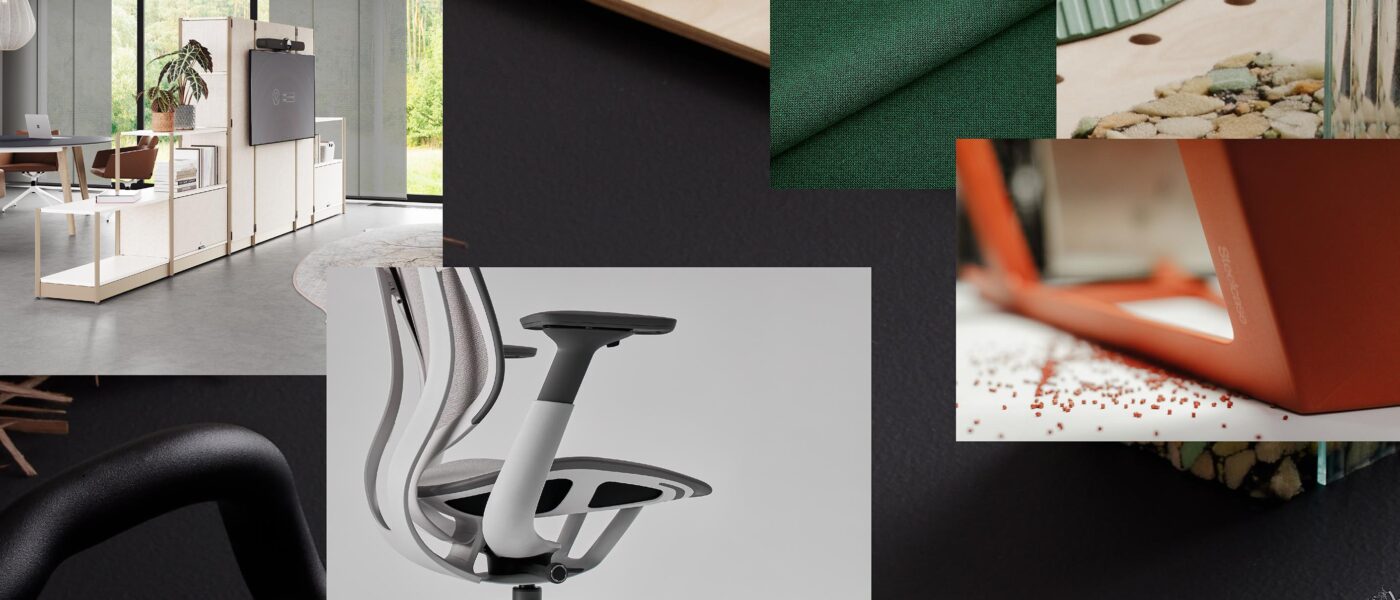
Durability and environmental friendliness.
Environmentally certified office furniture reduces the ecological footprint and creates healthy, sustainable working environments
The sustainable design of office workspaces requires a holistic approach to the entire fit-out. Through the choice of materials, manufacturing processes, service life and recyclability, office furniture has a significant impact on a company’s environmental footprint.
Sustainable furniture seamlessly combines environmental responsibility with a healthy indoor environment. Low-emission materials, durable construction and flexible usage concepts support working environments that retain their value in the long term and promote good health.
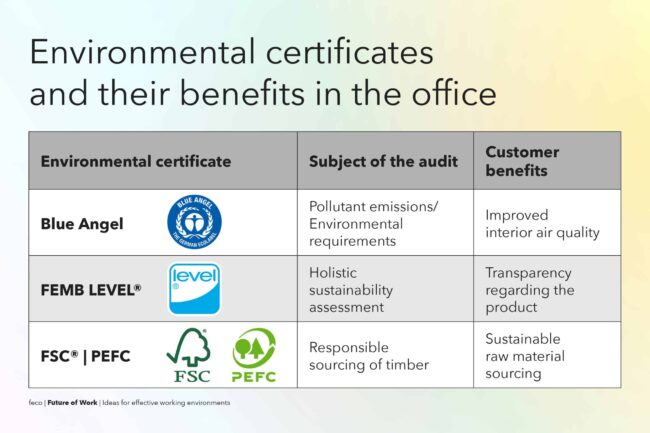
Environmental quality labels and low-emission materials
Sustainable office furniture is characterised by the conscious use of materials and high product quality. Quality labels such as the Blue Angel, FEMB LEVEL® and FSC® and PEFC certifications provide guidance: They assess material quality, emissions of harmful substances, resource use and the origin of raw materials.
Wood-based materials from certified forestry, recyclable metals, water-based varnishes and tested surfaces reduce the impact on indoor air quality. This ensures transparency throughout the entire product life cycle and guarantees long-lasting quality of use.
Structural durability and reparability
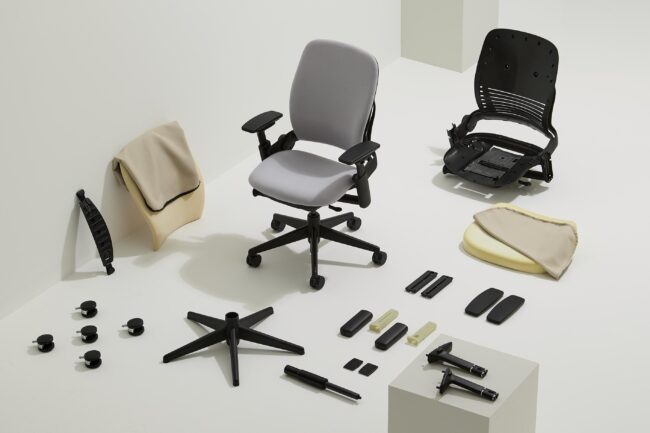
A key component of sustainable furniture is the consistent extension of a product’s lifespan. High-quality office furniture is designed so that individual components can be easily replaced, repaired or adapted. Modular designs, for example, allow for the targeted replacement of upholstery, mechanisms or surfaces without having to replace entire pieces of furniture. Long-term availability of spare parts and flexible customisation options prevent premature disposal.
This continued use keeps valuable resources in circulation for longer and supports the circular economy.
Conclusion: Sustainable procurement as part of the ESG strategy
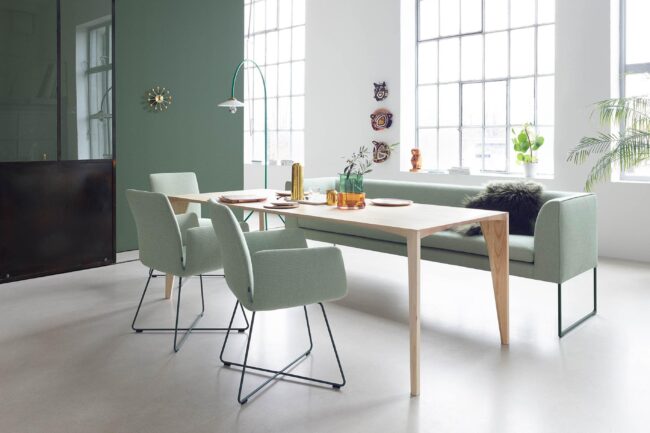
The selection of sustainable office furniture is a key component of responsible corporate governance. Excellent interior quality, together with certified, durable and low-emission furnishing solutions, support a company’s environmental objectives, improve the working environment and ensure investment security.
Through sustainable procurement, companies can conserve resources, measurably reduce their environmental impact and, at the same time, create attractive, healthy working environments.
Find out more: Media & Downloads
Make use of further information from our specialist sources and empirical surveys to optimise your planning processes in detail:
Federal Environment Agency: Guidelines for selecting durable and resource-efficient products
Environmentally friendly procurement
Blue Angel: Information on eco-labels and requirements for low-emission furniture
Low-emission furniture
German Sustainable Building Council: The DGNB certification system takes these criteria into account for building products and furnishings
DGNB Criteria Catalogue for Interior Spaces
FAQ – Sustainable Office Furniture
-
The Blue Angel label is awarded to products that meet particularly high standards of environmental and health protection. In the case of furniture, low emissions of harmful substances and low-emission manufacturing processes are particularly important.
-
Furniture that is repairable and modular in design does not need to be completely replaced if it becomes faulty. Replacing individual components extends the product’s lifespan and reduces the consumption of new resources.
-
Certifications and documented sustainability characteristics provide transparency regarding the origin of materials, environmental impacts and product quality. They help companies to document their sustainability targets in a transparent manner and to implement sustainable procurement processes.
We are at your service.
We are at your service.
Visit us in the feco-forum on more than 3.500 square meters.
Arrange a consultation