Productivity | Biophilia
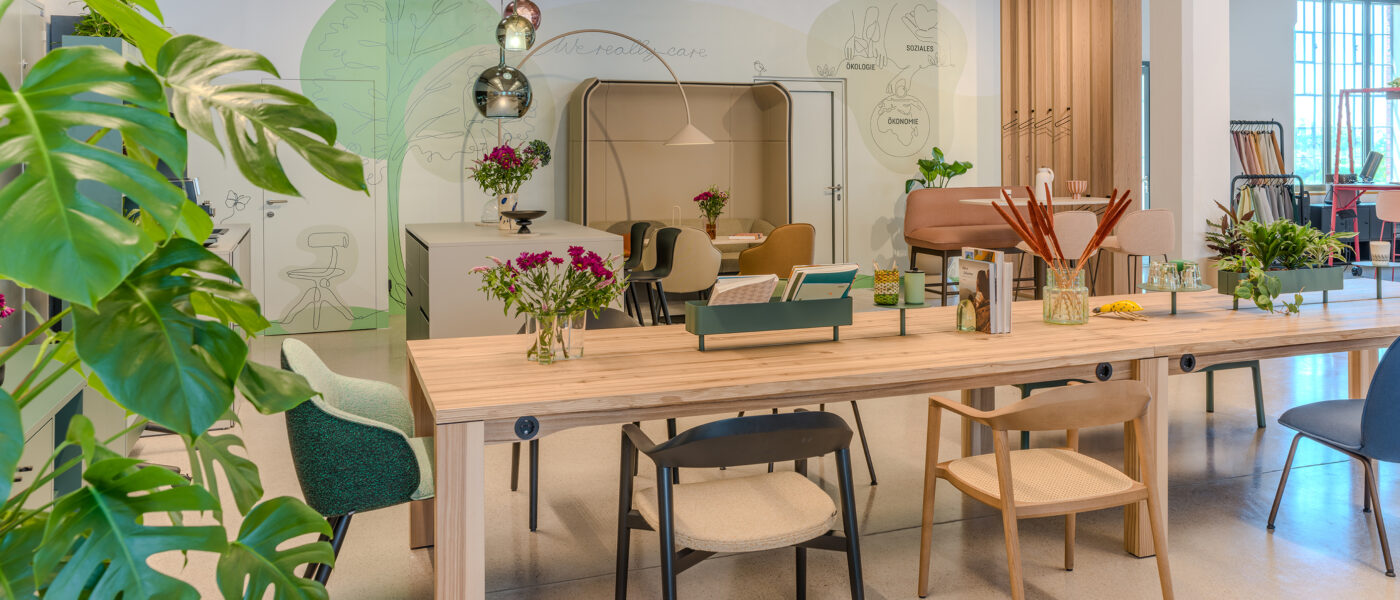
The workplace in harmony with nature

The deliberate integration of natural elements and materials promotes well-being, reduces stress and improves the indoor environment.
Biophilic design in the office is based on the innate human need for a deep connection to the natural environment. In inward-facing workspaces, artificial surfaces and a lack of connection to nature often lead to increased stress, cognitive fatigue and reduced creativity. The integration of biophilic design principles is an effective measure within the framework of ergonomic workplace design in accordance with ASR A3.6 and ASR A3.7. Empirical studies show that biophilic spaces lower cortisol levels, regulate blood pressure and noticeably improve the ability to concentrate. Modular wall systems support this concept through the use of real wood surfaces and transparent glazing.
Physiological effects and biophilic design principles
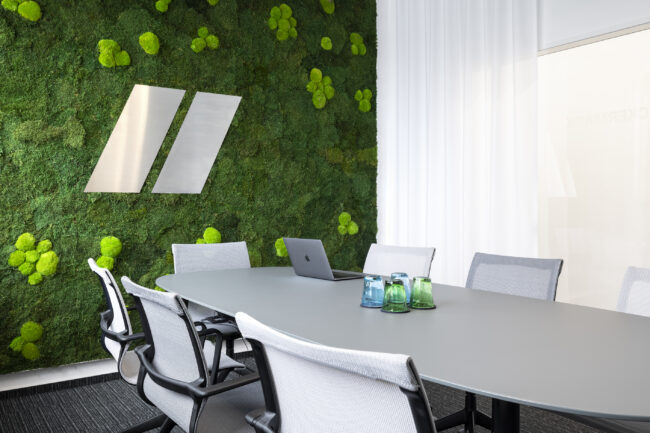
From a physiological perspective, natural textures, real wood veneers and plants have a positive effect on the autonomic nervous system. Real wood surfaces on system walls radiate a natural warmth that can reduce heart rate and alleviate stress. Green walls and moss elements also improve indoor air quality by stabilising humidity within the optimal range of 40% to 60%. This combination of tactile natural materials and vertical greenery reduces fine dust levels and creates a biologically balanced atmosphere in high-traffic work areas.
Spatial planning implementation and vertical greening
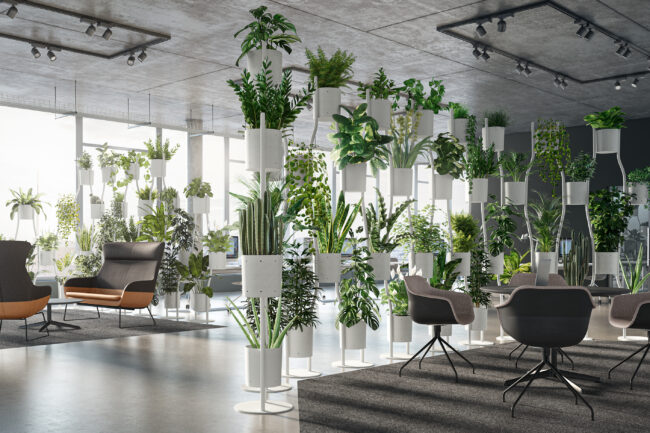
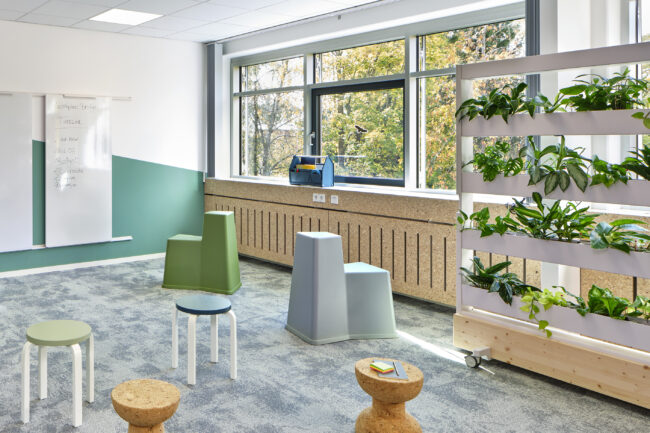
In spatial planning practice, the integration of biophilic elements enables a harmonious blend of nature and modern modular wall architecture. Planters or freestanding green room dividers provide effective privacy screening whilst also acting as natural broadband absorbers to reduce noise. Transparent glass walls maintain visual contact with outdoor areas and sources of natural light, which facilitates targeted cognitive regeneration and enhances the sense of space. Specialist planners thereby create fluid transitions between zones that offer relaxation and sustainably promote agile teamwork in a refreshing environment.
Conclusion: Biophilia as a forward-looking standard for healthy offices
Biophilic design is a strategic investment in the health, well-being and productivity of office workers. The combination of genuine natural materials, daylight and vertical greenery creates an inspiring working environment that is a pleasure to be in. Through biophilic spatial concepts, architects and companies are setting clear benchmarks for modern health promotion and sustainable employer appeal in a competitive market.
Find out more: Media & Downloads
Make use of further information from our specialist sources and empirical studies to optimise your planning processes in detail:
Terrapin Bright Green: Scientific foundations and design principles for biophilic architecture and working environments.
14 Patterns of Biophilic Design
Gensler Research Institute: International study on the impact of high-quality working environments on well-being and staff retention.
GLOBAL WORKPLACE SURVEY 2024
FAQ – Biophilia in the office
-
Biophilic office design deliberately integrates natural elements such as plants, daylight, wood and water features into the architecture of workspaces. This satisfies the fundamental human need for contact with nature and promotes mental health.
-
They raise the relative humidity to a healthy level of between 40 per cent and 60 per cent and filter fine dust and pollutants from the air. Furthermore, as green broadband absorbers, they absorb disruptive speech noise in open-plan offices.
-
Real wood veneers lend rooms a tactile, warm aesthetic and have been shown to have a calming effect on the autonomic nervous system. Furthermore, as a hygroscopic building material, they naturally regulate the humidity of the air in the room.
We are at your service.
We are at your service.
Visit us in the feco-forum on more than 3.500 square meters.
Arrange a consultation