Productivity | Ergonomics

Dynamism and health in the workplace.
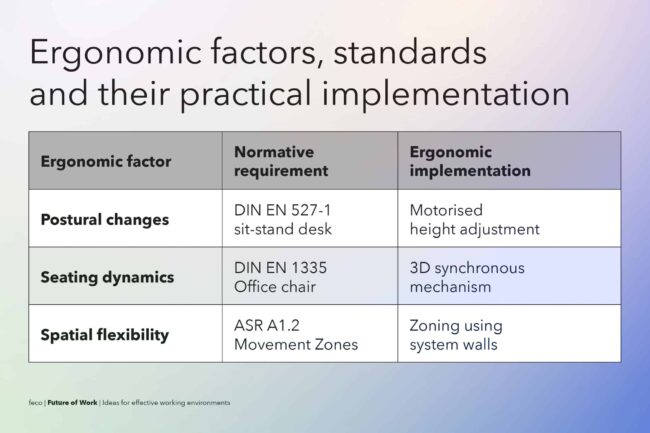
Well-designed workplace layouts promote physical health and boost productivity.
Ergonomic working environments are a key prerequisite for the long-term health and cognitive performance of employees. A lack of physical activity and rigid sitting postures often lead to musculoskeletal disorders in everyday office life. DGUV Information 215-410, ASR A1.2 and DIN EN ISO 9241 set out binding requirements regarding posture, reach distances and freedom of movement.
Ergonomic studies show that consistent application of ergonomic principles drastically reduces absenteeism due to ill health and enhances well-being. feco’s holistic furnishing concepts combine dynamic sitting with height-adjustable sit-stand solutions.
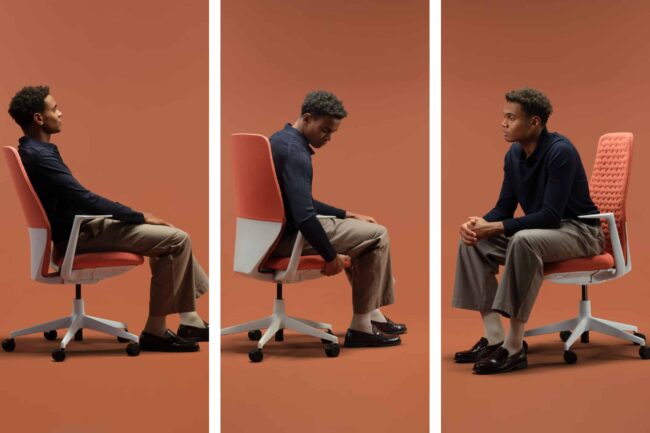
Biomechanical principles and dynamic working
From a biomechanical perspective, a health-promoting working environment requires a continuous alternation between sitting, standing and moving around the room. Motorised height-adjustable desks with adjustment ranges in accordance with DIN EN 527-1 allow for a smooth change of posture directly at the workstation. This relieves pressure on the spine, stimulates the cardiovascular system and prevents fatigue-related tension. Complementary office chairs compliant with DIN EN 1335, featuring 3D synchronous mechanisms, support dynamic sitting and activate the deep back muscles. By adjusting the seat height, seat depth and armrests to suit the individual body measurements of users, these chairs ensure physically optimal pressure distribution across the intervertebral discs.
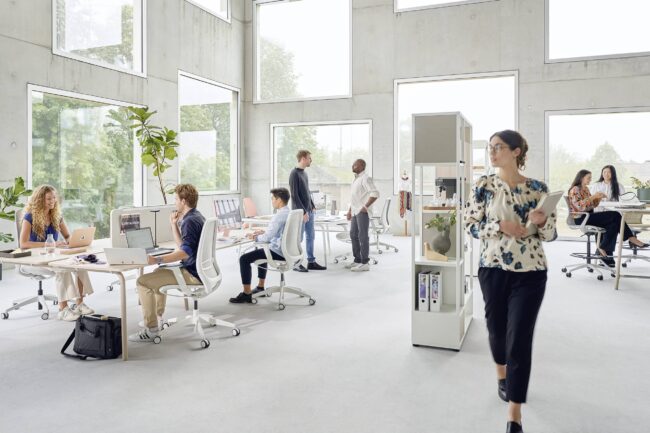
Promoting physical activity through spatial planning and zoning
Ergonomics is not limited to individual desks, but encompasses the entire spatial choreography of an office building. A well-thought-out layout of communication areas and agile meeting points specifically encourages staff to change their posture regularly and take short walks. Acoustically insulated system walls and mobile partitions create the necessary visual and auditory tranquillity to ensure that ergonomic working can be achieved without disruption, even in open-plan office layouts. The flexible positioning of monitors and lighting also prevents the body from making compensatory movements that are harmful to posture and guarantees a viewing angle at the screen that is safe for health.
Conclusion: Ergonomics as a strategic investment in human capital
Forward-looking ergonomic planning of office workstations is an indispensable component for future-proof businesses. The combination of height-adjustable office furniture, dynamic workflows and space zoning tailored to needs protects employees’ health in the long term. In this way, employers not only comply with all legal requirements of the Workplace Regulations, but also enhance their appeal to prospective recruits and safeguard the long-term productivity of their workforce.
Find out more: Media & Downloads
Make use of further information from our specialist sources and empirical studies to optimise your planning processes for sustainable office concepts in detail:
Federal Institute for Occupational Safety and Health: Guidelines on the ergonomic design of computer workstations and office workstations.
Work organisation and ergonomics
German Social Accident Insurance: Ergonomic requirements for work equipment and healthy computer use.
Computer workstations and office workstations
DIN EN ISO 9241: Normative guidelines for ergonomic design.
Ergonomics of human-system interaction
FAQ – Ergonomics in the workplace
-
Workplace Regulation ASR A1.2, DGUV Information 215-410 and DIN EN ISO 9241 set out binding standards for movement areas, changes of posture and display screen equipment. Compliance with these standards protects employees from physical strain and ensures ergonomic quality.
-
Regularly changing your posture relieves pressure on the intervertebral discs, stimulates blood circulation and helps prevent chronic back pain. Working in a sit-stand position also increases the supply of oxygen to the brain and helps maintain concentration.
-
They enable clear acoustic and visual zoning of the space, effectively minimising distracting glare and noise pollution at computer workstations. They also create sheltered spaces where staff can work undisturbed and in an ergonomically correct manner.
We are at your service.
We are at your service.
Visit us in the feco-forum on more than 3.500 square meters.
Arrange a consultation