Working Methods | Hybrid Work
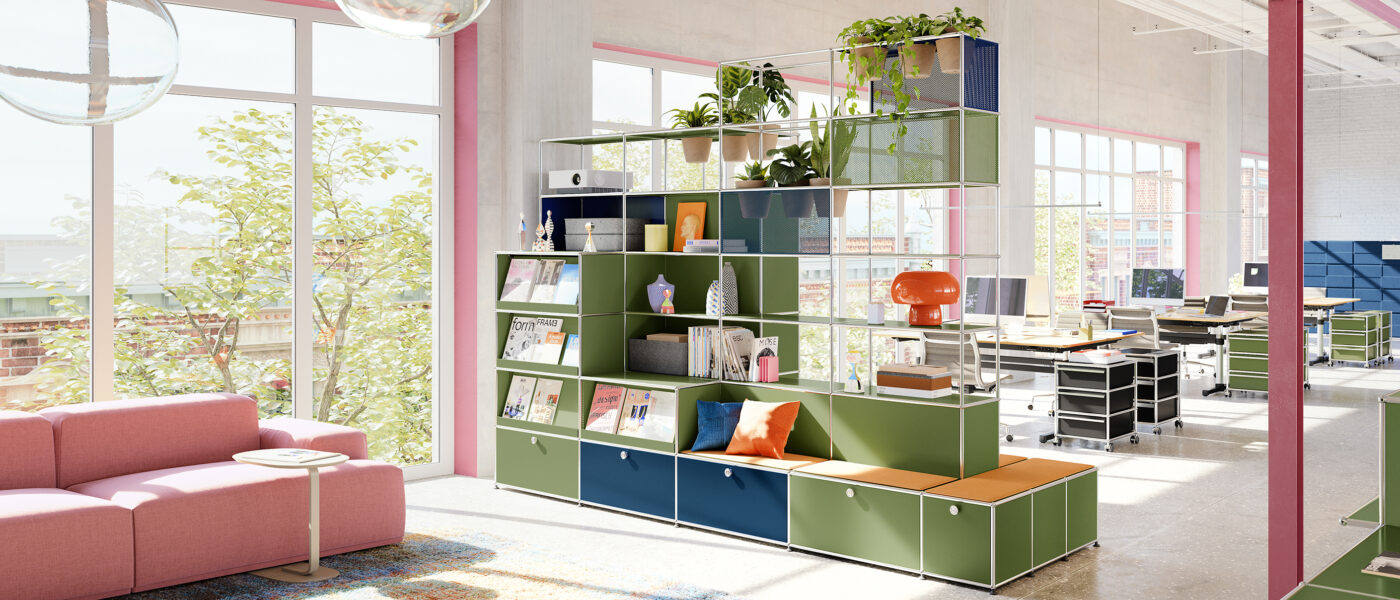
The Office as a Magnet: Spatial Strategies for the Synchronous and Asynchronous World of Work

How companies are using a combination of remote working and on-site work to turn workplaces into hubs for culture and identity.
The increasing flexibility of where work is carried out is fundamentally transforming the role of the central office. As tasks requiring concentration and routine tasks can be carried out just as effectively whilst working remotely, the traditional culture of physical presence is losing its justification. However, hybrid work does not devalue physical space; rather, it redefines it: the office is evolving from a mere place of physical presence into a magnetic hub for community, identity, creativity and complex problem-solving.
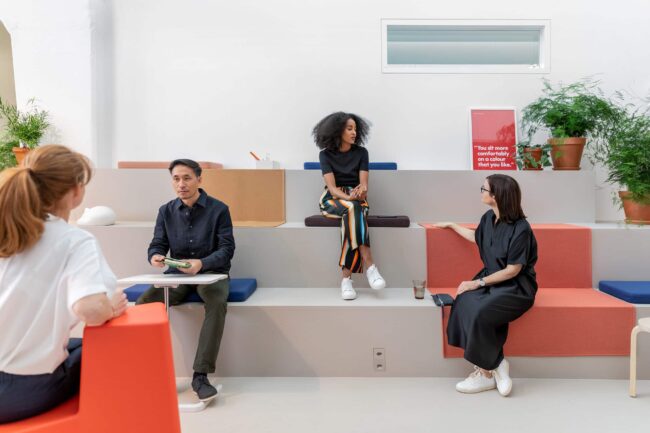
Creating added value through space: The office as a social hub
For employees to once again see the journey to the office as a genuine personal benefit, the built environment must offer qualities that the home working environment simply cannot provide. If working from home becomes the norm, the office cannot remain as it was – it must actively create added value, promote social interaction and specifically facilitate unplanned encounters within the spatial layout. This includes state-of-the-art media technology for hybrid conferences, professionally soundproofed quiet rooms for confidential telephone calls, as well as high-quality meeting rooms, lounge and bistro areas that noticeably accelerate the informal exchange of knowledge and strengthen emotional ties to the organisation.
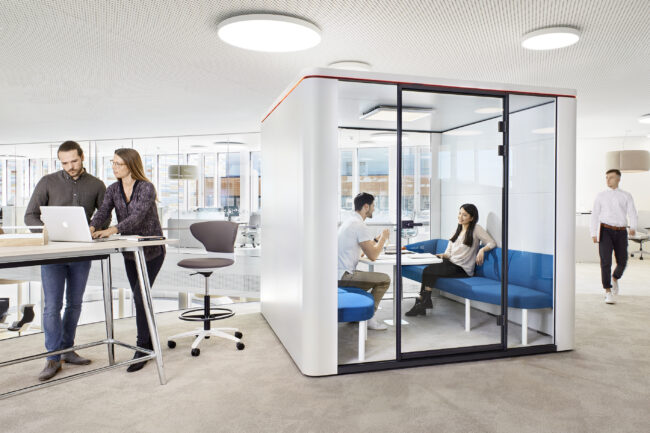
Designing interfaces: synchronous and asynchronous collaboration
Hybrid working environments require the precise harmonisation of digital infrastructure and the physical layout of workspaces. Meeting rooms must be designed, both technically and spatially, in such a way that remote participants can take part in interactions on an equal footing, without any acoustic or visual barriers arising. At the same time, the hybrid office requires flexible spaces that can be easily adapted to varying attendance rates throughout the week. Research into the transformation of hybrid working environments shows that companies with highly attractive, functionally zoned office environments achieve noticeably higher staff retention and gain a decisive advantage in the competition for sought-after skilled workers.
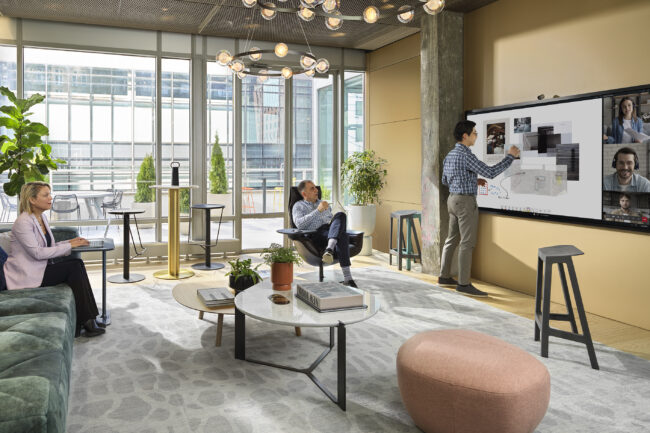
Conclusion: Physical space as an emotional anchor for hybrid identity
To meet the complex and often contradictory demands of hybrid teams, future-proof office planning relies on the consistent separation of communication zones and quiet zones. Whilst open community areas foster corporate culture, inspiration and team-building, movable glass partition walls in focus and meeting areas ensure the necessary privacy and sound insulation. The hybrid office of the future thus becomes a dynamic ecosystem that does not rigidly enforce physical presence, but rather justifies it on its merits, fosters a sense of identity and optimally supports the fluid transition between collaboration and retreat.
Explore further: Resources & Downloads
Make use of in-depth information from our specialist sources and empirical surveys to optimise your planning processes in detail:
Leesman Index: Surveys on the effectiveness of working environments and hybrid workplace experiences
Leesman Workplace Research
Federal Institute for Occupational Safety and Health: Framework conditions for teleworking and mobile working
BAuA Focus: Teleworking and Mobile Working
Microsoft WorkLab: Long-term study on changes in hybrid collaboration
Work Trend Index
FAQ – Hybrid Work
-
Office spaces require fewer fixed individual workstations and more multifunctional areas for teamwork, focused work, meetings, workshops and informal discussions, as well as high-performance digital media technology.
-
Through inspiring interior design that encourages social interaction, offers ergonomically optimised working conditions and provides types of space that working from home cannot offer, either in organisational or technical terms.
-
High-performance video and audio systems are required, which also allow remote participants to be fully integrated, combined with user-friendly media units and acoustically optimised wall systems.
We are at your service.
We are at your service.
Visit us in the feco-forum on more than 3.500 square meters.
Arrange a consultation