Planning & Spaces | Media Units

The intelligent interface between interior design and AV technology.
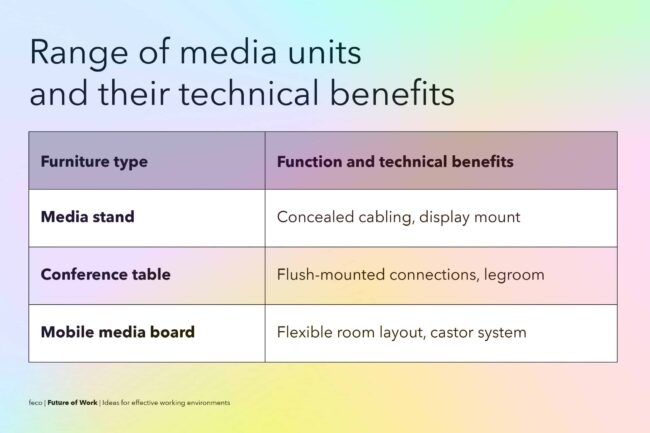
Seamless integration of screens and video conferencing systems for future-proof, hybrid working environments.
The seamless integration of media technology is crucial for the smooth running of hybrid meetings. Architects and specialist planners face the challenge of incorporating screens, camera systems and cable management into meeting rooms in such a way that the room’s aesthetics are preserved – exposed cables or poor acoustics significantly impair communication.
Professional media units forms the interface between architecture and IT: it integrates complex AV technology invisibly and blends harmoniously into high-quality office designs. Bespoke solutions protect the technology, promote ergonomics and meet the requirements of modern workplaces.
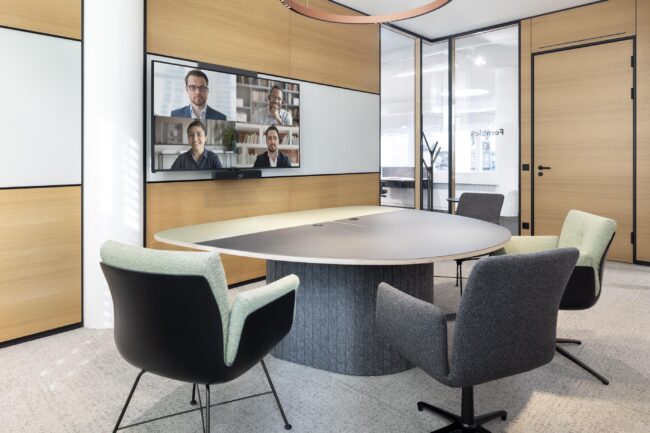
Technological integration and acoustic effectiveness.
The integration of AV hardware requires specific furniture designs that ensure the technical components are securely housed, provide adequate ventilation and feature a structured cabling system. Professional media units combines architectural design with the requirements of modern information and communication technology.
Thanks to integrated cable management, access panels and coordinated interfaces, screens, camera systems and conference technology can be integrated into workspaces and meeting rooms in a way that is both functional and aesthetically pleasing. In combination with acoustically effective surfaces and spatial planning measures, media units can help to improve speech intelligibility and the quality of the environment in hybrid working environments.

Practical spatial integration and agility.
For future-proof office planning, media units must be able to adapt flexibly to changing usage concepts. From electrified conference tables with flush-mounted connections, through space-defining media columns, to mobile media boards on castors, modular systems enable the rapid adaptation of meeting, workshop and collaboration areas.
The combination of media technology, furniture and spatial structure creates holistic working environments in which digital collaboration and the physical quality of the space are seamlessly integrated. Thanks to intelligent access to connections and technical components, maintenance and adjustments can be carried out efficiently, even as requirements change.
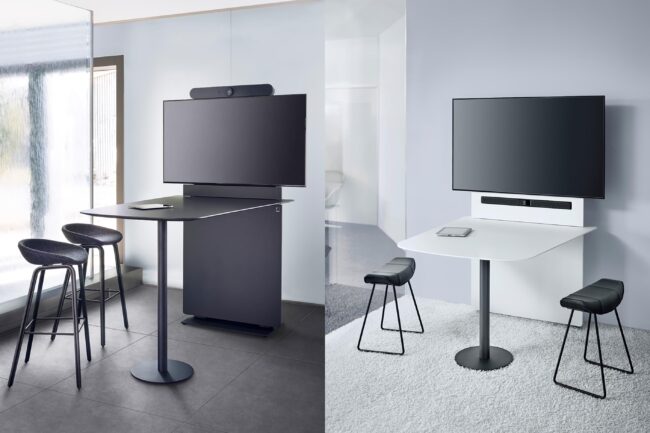
Conclusion: Investment security through system compatibility.
High-quality media furniture represents a strategic and essential investment in the productivity and prestige of modern office buildings. Building owners, architects and specialist planners benefit directly from the long-lasting quality and the enormous adaptability of these modular furnishing systems to future generations of technology. The seamless fusion of excellent furniture design, precise AV technology and ergonomic interior design creates hybrid working environments that consistently meet the highest architectural standards and ensure that digital collaboration within the organisation is fully future-proof.
Find out more: Media & Downloads
Make use of further information from our partners and specialist sources to optimise your planning processes for hybrid working environments in detail:
Federal Institute for Occupational Safety and Health: Designing modern computer-based work, hybrid collaboration and digital workplaces
Modern computer-based work
BAuA Research: Recommendations for video conferencing systems and hybrid meeting rooms
Cognitive ergonomics in virtual team communication
Audiovisual and Integrated Experience Association: Media technology integration and AV architecture in the conference room
AVIXA Standards for Media Technology Integration
FAQ – Media Units
-
They conceal complex media technology, thereby preventing unsightly cable clutter and visual distraction in the room. At the same time, they ensure the necessary ventilation for sensitive IT components and preserve the high-quality architectural aesthetics.
-
With the right integration solutions, displays, camera systems and other technical components can be incorporated into room structures in a way that enhances their aesthetic appeal. These structured solutions not only ensure mechanical stability but also maintain the acoustic insulation properties of the wall construction.
-
The choice of suitable media units influences the technical integration, ergonomics and design quality of workspaces. Key factors include effective cable management, ease of maintenance, flexible adaptability and a harmonious integration of technology and interior design.
We are at your service.
We are at your service.
Visit us in the feco-forum on more than 3.500 square meters.
Arrange a consultation